
Best B2B Prospecting and Lead Generation Tools (2026)
The best B2B prospecting tools, sorted by job: signals, data, emails, sequences, LinkedIn, CRM. What each does, who it suits, its real limit.

By Maxime Pudzeis, Founder, Kaizen Agency
· 12 min read
On this page
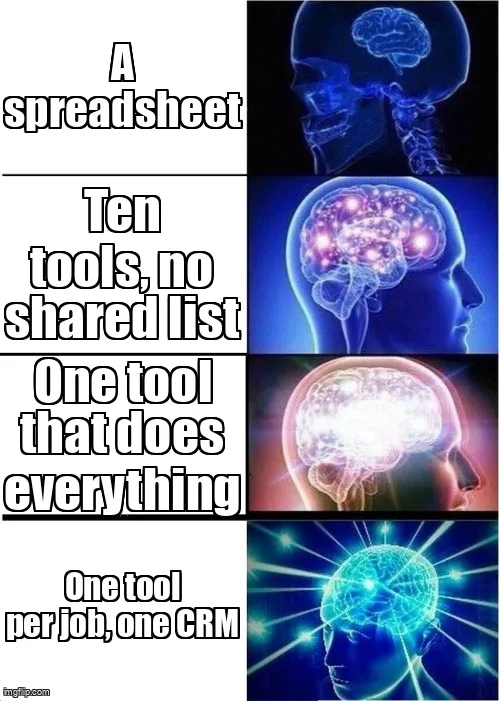
The best B2B prospecting tools split into six jobs: spotting buying signals, building and enriching a list, finding a working email, sending the sequence, working LinkedIn directly, and keeping replies in a CRM. No single tool does all six well. A working stack picks one or two tools per job, the way we run it for our own clients, rather than one platform asked to do everything.
The Clay, lemlist, Zapmail and Prospeo links in this guide are partner links: we may earn a commission or credits if you sign up, at no extra cost to you. The verdicts and the order do not depend on them.
A prospecting stack is a chain, not a single tool doing everything.
Spot who is actually in motion (a hire, a funding round, a tool going live) before a single email goes out.
Turn a name or a domain into a usable record: title, company size, a working domain.
Turn that record into a deliverable address, checked before it gets sent to.
Carry the message across email and LinkedIn on a schedule, with follow-ups that add a new angle.
Search, connect and message on LinkedIn itself, where a lot of B2B decision-makers actually reply.
Hold the replies and the deals in one place, so nothing falls through between channels.
What makes a B2B prospecting tool worth using
A prospecting tool is worth paying for when it does one job well enough that you would miss it if it disappeared. Most tool lists online rank twenty to thirty tools on one flat scale, mixing a CRM, an email finder and a LinkedIn bot as if they competed for the same budget. They do not. They sit at different points of the same chain, and a tool that promises to "do outbound for you" usually means it covers two or three jobs adequately and the rest not at all.
Two checks matter more than any feature list. First, where does its data actually come from, and does the vendor's own site say anything about coverage in Belgium, France or the Netherlands, rather than a global number that hides thin European coverage. Second, what does the vendor's own site state about GDPR: a certification badge is not the same as a compliance statement, and neither replaces a conversation with your own counsel before signing a data processing agreement.
Data and enrichment
This job turns a name or a domain into something a sequence can use: a verified title, a company size, a working domain.
 Clay positions itself on its own site as a GTM infrastructure platform, not a plain contact database: it connects more than 200 data providers through one interface, runs "waterfall" enrichment that tries several sources until one answers, and adds AI research agents that look up a company or a person first. It suits a team with someone technical enough to build the workflow once. Signing up through our link gives you free Clay credits once you activate a paid workspace. AI prospecting with Clay and Claude Code covers how we wire it for a B2B SME. Its limit: it names one customer's European rollout but makes no explicit Belgium or France coverage claim, and states no pricing on the homepage, so budgeting needs a trial run.
 Apollo combines a database the company states holds more than 240 million contacts and 30 million companies with sequencing and an AI layer that drafts outreach and prioritizes leads. It has a free plan, then paid plans billed per seat with shared monthly credits, topped up by an add-on purchase when needed. It suits a team that wants data and sending together. Apollo's own site lists GDPR, SOC 2 Type II and ISO 27001 among its certifications, without a Belgium or France breakdown. Its limit: a database this broad trades some depth for reach, so a niche B2B SME must still verify its own ICP matches before buying.
 Lusha states on its own site that it holds more than 515 million verified contacts and 29 million companies, reachable through its workspace, an API, or inside Claude and ChatGPT. It has a free plan, then paid plans billed on a monthly credit allowance, with email and phone lookups costing different amounts of credit. It suits a team that mainly needs a contact lookup layer. Lusha lists GDPR and CCPA compliance with ISO 27701, ISO 42001 and SOC 2 Type II certification, and describes general "GDPR-compliant coverage" for Europe. Its limit: no Belgium- or France-specific figure backs that claim, so test real target accounts first.
Email finding and verification
Finding a name is not the job. Getting a real, deliverable address without guessing is.
 Prospeo finds emails and phone numbers by name, company or social profile, and its own site offers free credits to test the finder before paying. It suits a team that wants a dedicated finder plugged into an existing sequencing tool rather than an all-in-one platform. Its site references a Trust Center covering GDPR and legal matters, behind a separate page rather than the homepage. Its limit: the homepage leans on free credits and "flexible plans" rather than a stated accuracy rate, so verify on a sample list first.
 Dropcontact is built around a France-first, GDPR-first promise: its site states it needs only a website and a first and last name to return a nominative, verified email, with no personal database behind it ("no personal information is stored or resold"). It claims validity rates of 99% for nominative emails and 97% for catch-all addresses, and enriches records with a company's French SIREN code, a detail no English-language tool in this list offers. It offers free trial credits to start, then paid plans billed on a chosen monthly credit quota that renews each cycle and refunds the credit when no email gets found. It suits a team prioritizing GDPR posture over raw database size. Its limit: the SIREN enrichment is France-specific by design, so a Belgium- or Netherlands-only list gets the verification but not that field.
Sending and sequences
This job carries the message once the list and the email address both exist, across more than one touch, without the sender doing it by hand each time.
 lemlist combines a database the company states runs past 650 million leads with multichannel sending across email, LinkedIn, calls and SMS, with WhatsApp as a paid add-on, plus a warm-up tool (lemwarm) meant to protect deliverability before volume ramps up. Cold email structure that gets replies decides whether any of that sending actually converts, regardless of the platform. It offers a free trial, then paid plans billed per user, with a separate credit system for lead enrichment and intent signals. lemlist's site states it is SOC 2 certified and links a data processing agreement for GDPR. Its limit: a database this size invites sending to people who never asked, so list quality still matters more than the platform's own deliverability claims.
 La Growth Machine runs conditional, multichannel sequences across LinkedIn, email and X with A/B testing and a shared inbox, and its own site states it has been "safely automating LinkedIn since 2017" using dedicated mobile proxies to protect accounts. It offers a free trial, then paid plans billed per LinkedIn identity, with extra lead enrichment sold as a credit-based add-on. It suits a sales operations team running LinkedIn and email from the same sequence logic, and it integrates directly with Clay, HubSpot, Make and Zapier by its own description. Its site links a downloadable GDPR data processing agreement. Its limit: the safety promise is about protecting your LinkedIn account, not the quality of who you are reaching.
 Zapmail does not send anything itself: it creates the mailboxes the sequence sends from. On its own site, it sets up Google and Microsoft mailboxes on separate domains, configures the SPF, DKIM and DMARC records automatically, and exports the mailboxes to lemlist and the other main sending tools. It is billed per mailbox, by monthly subscription. It suits any team that sends cold email at volume and wants to keep its main domain out of the risk. Its limit: the site says the mailboxes are hosted in the United States, so a European team should check with its counsel what that means for its data.
LinkedIn automation
A lot of B2B decision-makers read LinkedIn before they read a cold email. This job works that channel directly.
 LinkedIn Sales Navigator searches LinkedIn's own base of more than one billion members, with real-time alerts on job changes and engagement, AI-generated account and lead insights, and InMail for a direct message outside your network. It offers a free trial, then paid plans billed per seat, with the most advanced plan sold only through a sales conversation. It suits any B2B team doing manual, researched outreach to a specific account list. The product supports seven languages including French and Dutch, a real fit for a Belgian or Benelux buyer, though its page says nothing about European data residency beyond that. Its limit: it is a search and messaging tool, not a sequencer, so it needs lemlist or La Growth Machine downstream for the follow-ups.
 Waalaxy automates connection requests, messages and follow-ups on LinkedIn and syncs replies into HubSpot or Pipedrive; its own site states that about three in four users had never run LinkedIn outreach before. It offers a free trial, then paid plans billed per user, with its inbox tool sold as a separate add-on. It suits a founder or small team with no existing outbound process, closer to point-and-click than a platform built for operators. Its limit: its homepage makes no explicit statement about GDPR or where the company is based, a direct question for the vendor before signing a data processing agreement.
 Kaspr extracts phone numbers and emails straight from LinkedIn profiles through a Chrome extension, with bulk enrichment for uploaded lists, and its site states coverage of more than 500 million verified and compliant contacts from over 150 sources. It has a free plan, then paid plans billed per user with a credit system for each contact data type, topped up by extra credits. It suits a sales or recruiting team already living inside LinkedIn. Kaspr's site displays GDPR and CCPA certification badges and advertises "instant access to accurate European contact data," a more explicit claim than most of this list. Its limit: it answers jobs 5 and 2 together, but it is not a sender, so outreach still runs through another tool.
CRM
This job holds the result of every other job: the replies, the stage of each deal, who owns the next step.
 HubSpot Sales Hub manages the sales cycle end to end: AI-assisted prospecting, deal tracking, conversation intelligence and reporting, from a free plan up through paid plans with more automation. It suits a B2B SME that wants its CRM, email and reporting in one ecosystem rather than connected by integrations. Its product page states nothing about GDPR or European data hosting, a direct question for HubSpot rather than an assumption either way. Its limit: the free plan covers basic deal tracking only, and the automation that actually saves time sits a few paid steps up.
 Pipedrive is built around a visual, kanban-style pipeline, with lead management, email and calendar sync, workflow automation and call recording layered on top. It offers a free trial rather than an ongoing free plan, then paid plans billed per seat, with extras like lead capture and web visitor tracking sold as separate add-ons. It suits a sales team that wants the pipeline itself as the main interface, rather than a tool bolted onto a bigger marketing suite. Pipedrive's site states plainly that it is "GDPR compliant and secure," with AES-256 encryption and full SOC 2 compliance, serving customers across 179 countries. Its limit: it manages the pipeline well but does neither the data nor the sending job, so it sits at the end of the chain, not the start.
Buying signals
This job answers a different question than the rest: not who fits the ICP, but who is in motion right now.
 Cognism combines phone-verified contact data with intent signals built from hiring activity, funding news and job postings, refreshed, by its own statement, every 30 days. Its site specifically describes itself as built with "Europe-first expertise" and "growth in Europe," with Do-Not-Call coverage across the continent and international phone verification, a more deliberate European focus than most data vendors in this list. It suits a team past the first few deals that wants signals layered on a contact database rather than two separate subscriptions. Its limit: pricing is quoted per business rather than published, so there is no self-serve starting point, only a sales call. Which B2B intent signals to track covers turning a signal like this into an actual message instead of a vague alert nobody acts on.
Building a stack instead of buying one tool
| Job | Example tools | What it answers |
|---|---|---|
| Buying signals | Cognism | Who is in motion right now |
| Data and enrichment | Clay, Apollo, Lusha | Who fits the ICP, with a usable record |
| Email finding and verification | Prospeo, Dropcontact | A deliverable address, checked |
| Sending and sequences | lemlist, La Growth Machine | The message, across channels, on a schedule |
| LinkedIn automation | Sales Navigator, Waalaxy, Kaspr | The channel decision-makers actually read |
| CRM | HubSpot, Pipedrive | Where every reply and deal lives |
None of the tools above cover all six jobs well, whatever their marketing claims. For one of our clients, we built the data, sending and CRM jobs into one engine rather than three disconnected subscriptions, because a signal that never reaches the sequencing tool is just a notification, and a reply that never reaches the CRM is a lead nobody follows up on. The table above is one working version, not the only one: a team selling a narrow, high-value list in Belgium might lean harder on Sales Navigator and Kaspr for manual research, while a team running volume across France and the Netherlands leans harder on Clay and lemlist. Where to find B2B data in Belgium compares the registries feeding the enrichment job for that market, since a global contact count means less than what resolves for your own country list.
Common mistakes
- Buying the all-in-one platform first, then discovering it covers three of the six jobs adequately and the rest not at all, after the contract is signed for a year.
- Trusting a global contact count without testing it against your own target accounts in Belgium, France or the Netherlands, since a worldwide database can still be thin in one region.
- Treating a GDPR badge on a vendor's site as equivalent to reading what that vendor actually commits to in its data processing agreement.
- Running a LinkedIn automation tool at full volume on day one instead of a slow ramp, which gets the account flagged before a single reply.
- Leaving the six jobs disconnected: a signal nobody sees, an enriched list that never gets emailed, replies that never reach the CRM.
FAQ
What is the best B2B lead generation tool?
There is no single best tool, because the six jobs above are different problems. The best choice is the tool that answers the job you are missing today, not the platform with the most features on its homepage.
Are there free B2B prospecting tools?
Several tools in this list offer a free trial or a free plan limited by volume: Apollo, HubSpot, Pipedrive and Prospeo all state some form of free access on their own sites. A free plan tests list quality on real accounts, not a full campaign at scale.
What is the difference between a CRM and a prospecting tool?
A prospecting tool finds, enriches or contacts people who are not customers yet. A CRM like HubSpot or Pipedrive holds what happens after someone replies: the deal stage, the next step, who owns it. Most B2B SMEs need both.
Are these tools GDPR compliant?
Several state GDPR compliance or certification on their own sites, including Apollo, Lusha, Dropcontact, Kaspr, Pipedrive and Cognism. A badge is not a legal review of your own data processing agreement, so check the specifics with your own counsel, especially for any tool whose site states nothing on the question.
How much should a B2B SME budget for a prospecting stack?
It depends on how many of the six jobs need covering and at what volume, a question for a vendor's own pricing page rather than a general figure. Most tools here offer a free trial so a small team can size the real cost against its own list before committing.
A stack like this only pays off once the message behind it has been tested, not guessed at. The GOALS method is how we build and run that acquisition system for B2B SMEs in Belgium, France and the Netherlands, tools included. Not sure which of the six jobs is costing you pipeline today? A 4-minute diagnostic scores where the system leaks before another subscription gets added.