
B2B Social Selling on LinkedIn, Done Right
Turn your LinkedIn profile into a pipeline with B2B social selling: profile, posting, prospect engagement, and where outbound fits in.

By Maxime Pudzeis, Founder, Kaizen Agency
· 10 min read
On this page
B2B social selling is using LinkedIn to identify the right prospects and build a reputation they trust, before any pitch gets sent. It works through three things together: a profile built to convert, a rhythm of posting that gives prospects a reason to engage, and a way of turning that engagement into an actual conversation.
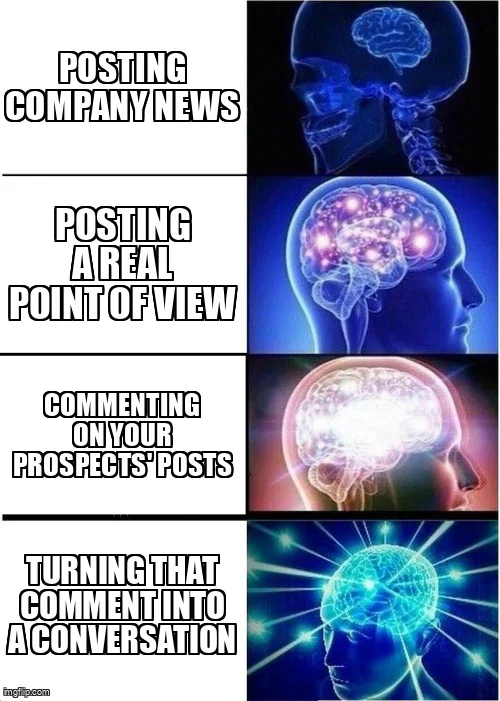
Skip a step and the next one has nothing to build on.
Reads like a landing page: who you help, with what, proof. The first thing a prospect checks before replying to anything.
A point of view, on a schedule, gives prospects something to react to. Not a news feed of company updates.
Comment on what the prospect posted, not a generic like. A real reaction to their actual point.
Their comment back, or a reply, becomes a DM that opens a conversation, never a pitch.
What counts as B2B social selling, and what doesn't
B2B social selling is the set of actions that build a relationship with a prospect through LinkedIn before a sales conversation starts: an optimized profile, consistent posting, and genuine engagement with what the prospect shares. It is not the same as posting content to be known with no prospecting intent behind it, and it is not the same as mass-connecting with a generic pitch in the first message, which is cold outreach wearing a LinkedIn costume.
The distinction matters because the two get confused constantly. A company page posting weekly updates is doing content marketing. A salesperson sending the same templated pitch to five hundred connection requests is doing outbound with extra steps. Social selling sits between the two: it uses content and engagement, the tools of content marketing, but it is aimed at specific accounts and specific people, the discipline of outbound. Done well, it produces something neither one does alone, a prospect who already recognizes your name and your point of view before your first direct message ever lands.
Your profile is the landing page, not a checklist item
Most explanations of social selling list "optimize your profile" as one step among several, next to posting and engaging. That undersells what the profile actually does. Every post you write, every comment you leave on someone else's post, and every notification a prospect gets when you view their profile sends them to exactly one place: your LinkedIn profile. If that page does not say, in the first screen, who you help and with what proof, the traffic that posting and engaging just earned leaks out the moment it arrives.
Treat the profile with the same discipline as a web landing page, because for a B2B founder or sales lead it is one. The headline names who you help and what you help them do, not a job title alone. The About section opens with a line that stops the scroll before the "see more" fold, states the problem you solve in the reader's own words, and closes on one clear next step. The Featured section carries one link to the thing you actually want a reader to do next, not a wall of old press mentions. A prospect who clicks through from a comment you left, and lands on a profile that reads like a resume, forgets why they clicked within seconds.
A profile rewrite is its own piece of work, not something to improvise while writing a post. If yours still reads like a resume, that is the first fix, before touching posting cadence or engagement tactics, because every later step sends traffic through it.
What to post, and how often
Posting inside a social selling practice has one job: give the people on your target list a reason to react, so you learn who is actually paying attention. That rules out two common habits. Reposting company news gives nothing to react to, since nobody disagrees with or adds to a product announcement. Posting purely to grow a personal following, with no connection to the accounts you actually sell to, grows an audience that never converts into pipeline.
A workable rhythm for a founder or a sales lead running this alongside an actual sales job: two to three posts a week, each one a real point of view, a specific result, or a lesson from a real deal, never a vague "thoughts on leadership" filler. One opinion stated clearly beats three safe observations, because an opinion is the only thing a reader can actually agree, disagree, or add a story to in the comments. A post that nobody could disagree with gets read and scrolled past; a post that takes a side gets a comment, and a comment is the whole point.
Write for the handful of accounts on your actual target list, not for reach. A post that only the people you are trying to sell to would recognize as true about their own week will get fewer views than a broad, safe one, and that is the correct trade: it brings the right few readers instead of a large number of the wrong ones.
Engaging with prospects' posts: the step most guides skip
Posting your own content gets most of the attention in social selling guides. Engaging with what a prospect posts gets a line or two, usually "like and comment on their content," with no real detail on how to tell a genuine comment from a filler one. That gap matters, because the engagement step is where social selling actually starts a relationship rather than just broadcasting one.
A like costs the prospect nothing to notice and nothing to remember. A specific comment, one that names the actual point the prospect made and adds something to it, is the first thing that looks like a real person paying attention rather than a notification. Treat the two differently on purpose: a like is a background signal worth watching for, a comment is worth writing and worth tracking, because the prospect who wrote it, or replied to yours, just told you more about what they care about than almost any other free signal available.
This is where social selling overlaps with the buying-signal discipline outbound already uses. A comment on a post is the same kind of evidence as a job change or a hiring spree: a specific, timestamped reason to reach out now, rather than a cold open to someone who has never heard of you. A comment is worth tracking, not just noticing, the same way a funding round or a new hire gets tracked, because it points to the same thing: a prospect who is paying attention right now, while the context is still fresh enough to mention.
Turning engagement into a conversation
The step that decides whether social selling produces pipeline or just a comments section full of polite agreement is what happens after someone engages. Three moves work, and all three avoid the mistake of pitching the moment someone reacts.
- Reply to their comment in public first, adding something, not just thanking them. This signals to anyone else reading the thread that the conversation is real, not a sales script.
- Move to a DM only once there is something specific to say, a question their comment raised, a related point worth expanding on, never "thanks for the comment, want to hop on a call?" the moment they engage. A DM sent the same way a cold pitch is sent wastes the one advantage engagement gave you: that the prospect already told you what they care about.
- Let the DM open a real conversation before any ask appears. The first message after a comment or a like should read like a reply to something they actually said, not a template with their name swapped in. The right order for a LinkedIn DM, visit, connect, then message, applies here too: engagement earns you the right to skip the cold connection request, not the right to skip straight to the pitch.
A prospect who commented twice on your posts this month and never got a reply from you learned that commenting does nothing. A prospect who commented once and got a specific, non-pitchy reply learned the opposite, and that is usually the difference between a name in your notifications and a name in your pipeline.
How social selling fits with outbound
Social selling and outbound get framed as competing channels more often than they should. They are not. Social selling warms an account before the first direct message; outbound still has to reach the accounts that never engage with anything, because most of a target list will not comment on a post no matter how good it is. Treating social selling as a replacement for cold email or LinkedIn prospecting leaves every quiet account on the list untouched.
The two work best run as one system rather than two separate motions competing for the same hour of the week. A prospect who engaged with a post gets a warmer opening line, one that references what they actually said, inside the same outbound sequence everyone else on the list gets. A prospect who never engages still gets the researched cold email or the LinkedIn connection request, because silence on a post says nothing about fit, only about whether that person happens to scroll LinkedIn that week. A real buying signal, a comment included, earns a message sooner and a sharper one, not a different channel altogether.
For one of our clients, we built outbound, social selling and buying signals as one engine rather than three separate efforts competing for the same list. There was no existing audience and no brand recognition at the start, so a prospect's engagement on a post became one more input into the same researched sequence, not a parallel track run by someone else. Qualified pipeline moved from zero to three million euros in eighteen months, built on the combination rather than any one channel carrying the whole load.
Common mistakes
- Posting without a profile worth landing on. Every post sends traffic to a page that still reads like a resume, and the traffic leaks out on arrival.
- Treating every like the same as a comment. A like is background noise; a comment is a specific signal worth a specific reply.
- Pitching the moment someone engages. The fastest way to make a prospect regret commenting is a sales pitch in the next message.
- Posting for reach instead of for the target list. A broad, safe post gets more views and converts worse than a specific one aimed at the handful of accounts that matter.
- Running social selling as a separate channel from outbound. A prospect who never engages still needs to be reached; engagement should sharpen the outbound message, not replace it.
FAQ
Is B2B social selling the same as cold outreach?
No. Cold outreach, a cold email or an unsolicited connection request with a pitch attached, starts a conversation with someone who has never interacted with you. Social selling builds familiarity first, through a profile, posts and genuine engagement, so that any message sent afterward lands with context already in place rather than starting from zero.
Does social selling actually work, or is it just posting content?
It works when posting is paired with engagement and a profile built to convert, not when it is posting alone. A founder who posts consistently but never comments on a prospect's content, and whose profile still reads like a resume, is doing content marketing with a sales label on it, not social selling.
How is social selling different from social media marketing?
Social media marketing aims at an audience and measures reach and visibility. Social selling aims at specific accounts and people on an actual target list, and measures whether engagement turns into real conversations with those specific prospects, not views in general.
How much time should social selling take each week for a founder or a small sales team?
There is no fixed number that fits every company, since it depends on list size and how many of those accounts are already active on LinkedIn. The useful test is whether the time spent produces real comments and replies from the accounts on your actual list, not whether a fixed number of hours were logged.
Does social selling work for a small B2B company without a content team?
Yes, and a founder or a single sales lead often has an advantage an SDR team does not: a prospect places more trust in a comment or a message from the person who actually runs the company. The constraint for a small team is usually consistency, posting and engaging on a real rhythm, rather than needing a content calendar built by someone else.
Social selling earns the attention; a system still has to turn that attention into booked calls. See how it fits the rest of the engine in GOALS, or score where your own profile, posting and outbound stand today in a 4-minute diagnostic.